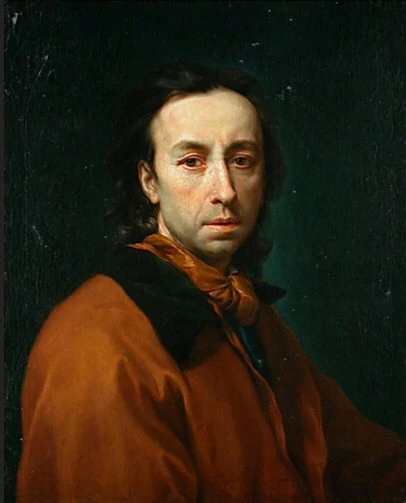
Fils, Filtz, Filz, Fieltz, Fiels Antonín, Johann Anton, baptised 22 September 1733 Eichstätt (Bavaria), buried 14 March 1760 Mannheim, German composer and cellist, son of cellist Johann Georg Fils, who was his first music teacher.
He attended Gymnasium in Eichstätt and, from 1753, studied at the University of Ingolstadt. From 1754, he worked in the Mannheim orchestra as a cellist and composer, studying there under J. Štamic; this is evidenced by the title page of Fils’s 6 Triosonaten (Op. 3), where he is described as: “virtuoso di camera di sua A.S. L’ elector Palatino discepolo di Giovan Stamitz.” In 1757, he married Elisabeth Range in Mannheim. He died at a young age, before fully developing his talent.
Alongside Ch. Cannabich and C.J. Toeschi, Fils was one of the leading representatives of the second generation of the Mannheim school and creators of the early Classical orchestral style. He was a very prolific composer, writing symphonic, chamber, and religious music. Fils’ symphonies enjoyed great popularity during his lifetime. Most of them have a clearly defined four-section structure, abound in melodic themes and strong expressive contrasts. His cello concertos and sonatas feature virtuosic elements and make full use of the instrument’s capabilities.
Literature: H. Riemann preface to «Denkmäler der Tonkunst in Bayern» III/l, 1902, «Denkmäler der Tonkunst in Bayern» VII/2, 1906 and «Denkmäler der Tonkunst in Bayern» XV, 1914; R. Sondheimer Die formale Entwicklung der vorklassischen Sinfonie, “Archiv für Musikwissenschaft” IV, 1921/22; J. Racek Die Tschechische Musik des 18. Jahrhunderts und ihre Stellung in der europäischen Musikkultur, in: Colloquium amicorum…, J. Schmidt-Georg’s commemorative book, Bonn 1967; P. Vit Kompositionsprinzipien der Sinfonien des Antonín Fils, «Sborník Prací Brněnské University» VII, Brno 1972; Johann Anton Fils (1733–1760): ein Eichstätter Komponist der Mannheimer Klassik, ed. H. Holzbauer, Tutzing 1983; H. Unverricht Johann Anton Fils (1733–1760), der angebliche Böhme aus Eichstätt: seine Bedeutung in Wissenschaft und Praxis, “Musik des Ostens” 10 (1986); E.K. Wolf Fils, (Johann) Anton, in: The New Grove Dictionary od Music and Musicians, London 2001; R. Thomsen-Fürst Fils, (Johann) Anton, in: Die Musik Geschichte und Gegenwart, 2001; R. Thomsen-Fürst Anmerkungen zur Überlieferung und Echtheit der Anton Fils zugeschriebenen Messen, in: Mannheim – Ein Paradies der Tonkünstler? Kongressbericht Mannheim 1999, ed. L. Finscher, B. Pelker, R. Thomsen-Fürst, Frankfurt am Main, Berlin, Bern, etc. 2002.
Editions (selection):
symphonies: A major (Simphonie périodique No. 2), D major Op. 2 No. 5 and E flat major Op. 2 No. 6, ed. H. Riemann, «Denkmäler der Tonkunst in Bayern» III/l, Leipzig 1902 (also includes a thematic catalog and a list of prints of Fils’ symphonies)
Symphony in D major (Simphonie périodique No. 10), ed. H. Riemann «Denkmäler der Tonkunst in Bayern» VII/2, Leipzig 1906 (with additions to the thematic catalog of symphonies)
String Trio in A major Op. 3 No. 2 and Harpsichord Trio in C major Op. 4 No. 3, ed. H. Riemann «Denkmäler der Tonkunst in Bayern» XVI/2 1915 (contains a thematic catalog and a list of printed chamber music works)
Concerto in Re maggiore for flute, ed. H. Kašlik and F. Suchý, «Musica Antiqua Bohemica» XVIII, Prague 1954 (piano reduction)
Sei sinfonie per orchestra Op. 2, eds. J. Racek and J. Pohanka, «Musica Antiqua Bohemica» XLIV, Prague 1960
Cello Concerto in G major, ed. H. Klug, Wiesbaden 1970
Symphony in D major and in E flat major, ed. R. J. Agee, in: The Symphony 1720–1840, C/IV, New York, London 1983
Symphony in C major, ed. D. Townsend, New York 1987
Sonates pour le violoncelle Op. 5 (facsimile edition of the first edition), Béziers 1990
Compositions:
Instrumental:
orchestral:
approx. 40 symphonies, published in separate collections, including:
Six simphonies à quatre parties, deux violons, alto viola & basse… Op. 1, Paris [1760]
Six simphonies à quatre parties obligées, avec cors de chasse ad libitum… Op. 2, Paris [1760]
Sei sinfonie a più stromenti… Op. 2, Paris [1761]
Sei sinfonie a più stromenti… Op. 5, Paris [ok. 1763]
Six simphonies choisies à deux violons, taille et basse, deux hautbois et deux cornes de chasse ad libitum, Amsterdam [1764]
in separate publications:
Symphony in A major (Simphonie périodiques No. 2), in: «Recueil périodique en simphonies», Paris n.d.
Symphony in E flat major (Simphonie périodiques No. 4), in: «Recueil périodique en simphonies», Paris n.d.
Symphony in D major (Simphonie périodiques No. 6), in: «Recueil périodique en simphonies», Paris n.d.
Symphony in G major (Simphonie périodiques No. 8), in: «Recueil périodique en simphonies», Paris n.d.
Symphony in D major (Simphonie périodiques No. 10), in: «Recueil périodique en simphonies», Paris n.d.
Symphony in E major (Simphonie périodiques No. 40), in: «Recueil périodique en simphonies», Paris n.d.
Symphony in A major (Simphonie périodiques No. 44), in: «Recueil périodique en simphonies», Paris n.d.
Symphony in E flat major (The Periodical Overtures… No. 4), London n.d.
Symphony in E flat major (The Periodical Overtures… No. 8), London n.d.
Symphony in F major (The Periodical Overtures… No. 30), London n.d.
in addition, individual symphonies were published in anthologies of the time
concertos:
Due concerti per flauto traverso principale… Op. 2, Paris n.d.
A concerto in seven Parts for the Violoncello…, London n.d., as well as in an arrangement for keyboard instrument as A Favourite Concerto adapter for the Organ, Harpsichord or Piano forte, London n.d.
in addition, approx. 10 solo concertos for flute and cello preserved in manuscripts
chamber:
Sei sonate a tre, due violini & basso… Op. 3, Paris [1760]
Six sonates en trio pour le clavecin, violon et basse, Op. 4, Paris [1763]
Sonates pour le violoncelle et basse continue, ou, le violon seul & basse… Op. 5, Paris [1763]
Sei sonate da camera, Paris n.d.
Six sonates en trio Op. 6, Paris [ca. 1765]
Six sonatas, London [ca. 1775]
additional Sonata, Duet and Trio preserved in manuscripts
Vocal-instrumental:
the manuscript contains, among other things, two masses, a cantata, an offertory, arrangements of vespers texts, a litany and Salve Regina, as well as a number of masses of uncertain attribution