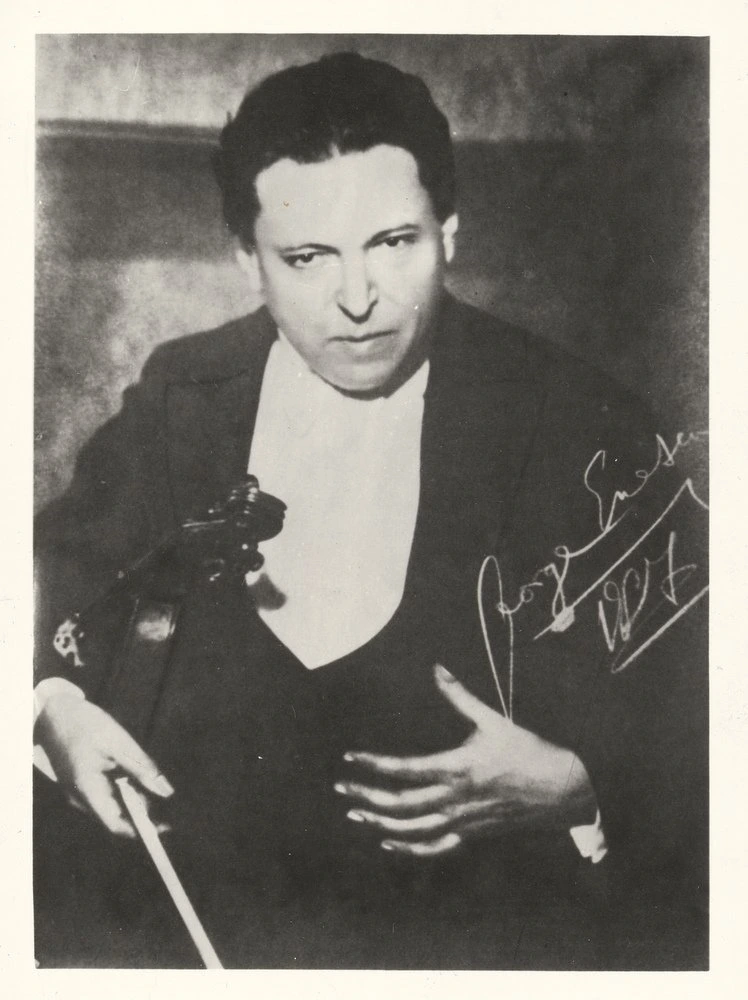
Enescu, Enesco, George, *19 August 1881 Liveni-Vîrnav (near Dorohoi, northeastern Romania), †15 May 1955 Paris, Romanian composer, violinist, conductor, pianist and teacher.
From a very young age, he showed extraordinary musical talent. At the age of five, he composed his first piece, România for violin and piano. At the age of seven, he performed in Iași in front of E. Caudella; on his advice, he was sent to study in Vienna, where, between 1888 and 1894, he was a pupil of J. Hellmesberger Jr. (violin), E. Ludwig (piano), R. Fuchs (harmony, counterpoint, composition) and J. Hellmesberger senior (chamber music) at the conservatory there.
In 1892, he made his debut in Vienna as a violinist, performing H. Vieuxtemps’s Fantasia. After completing his studies, he continued his education in composition and violin under his previous teachers in Vienna. In 1895, he began his studies at the Paris Conservatoire under the tutelage of M.-P.-J. Marsick and J. White (violin), A. Thomas and T. Dubois (harmony), A. Gédalge (counterpoint), as well as J. Massenet and G. Fauré (composition). On 6 January 1898, the world premiere of Enescu’s Op. 1 – Poema românǎ for orchestra – took place in Paris; a few months later, Enescu conducted the work in Bucharest, to which news of his remarkable progress had already reached.
After graduating from his studies in Paris in 1899 (with first prize), Enescu embarked on a highly active concert career, touring almost every major musical centre in the world. He never settled permanently anywhere, spending most of his time in Paris, as well as in Bucharest and Iași, where he conducted the local orchestras until 1920. In 1902, he founded a trio in Paris (together with L. Fournier and A. Casella), and in 1904 – a quartet bearing his own name. In 1912, he established a prize for Romanian composers, granted between 1913 and 1946.
In 1920, he founded the Union of Composers and Musicologists from Romania [Uniunea Compozitorilor și Muzicologilor din România], which he chaired until 1948. In 1936, the premiere of Enescu’s only opera, Oedipe, took place in Paris. As a violinist and conductor, Enescu undertook numerous concert tours, including to Belgium (1907), the Netherlands (1910), Russia (1917), Poland (1928), Italy (1939) and the USSR (1946); furthermore, 13 tours of the USA (1923–50) and four of England (1950–53). He also performed annually in France and Romania, including as an accompanist (with, amongst others, Y. Menuhin, J. Thibaud and D. Oistrakh). He was the initiator of music interpretation courses at, among others, the Accademia Musicale Chigiana in Siena (1954). He was a member of numerous artistic and academic societies, including the Academia Română in Bucharest (from 1916) and the Institut de France in Paris (1936).
The immense fame that Enescu enjoyed during his lifetime but it diminished rapidly after his death and remained largely limited to recognition in his homeland. This is evidenced by the fact that the roots of this fame lay chiefly in Enescu’s career as a performer, whilst his compositional output was regarded as a side stream to the main currents of development in contemporary music. In fact, Enescu’s creative approach, shaped during his studies under the influence of the late-Romantic tastes of the Viennese musical milieu, and subsequently under the influence of the French musical tradition (Saint-Saëns, Fauré, Massenet, Franck, Lalo), was as different from the speculative approaches of the Viennese school as it was from the uniformizing tendencies of the neo-stylistic movement. Enescu’s compositional technique in his orchestral works is distinguished by an excellent use of string instruments, as well as a distinctive, very dense contrapuntal texture in which individual threads are constantly dispersed amongst the instrumental parts. Typical of Enescu’s orchestral texture is the simultaneity of many musical events; thanks to his great inventiveness, the result is an impression of immense richness in the musical flow.
Enescu’s distinctive style is also defined by richly ornamented, typically instrumental melodic lines and a seemingly static bass line that shifts in syncopated patterns. In his folklore-inspired works, he avoided direct quotations, capturing only certain characteristic features of Romanian folk music, such as intense melismas, the interweaving of modes, modulatory mobility, frequent harmonic syncopations and others.
Enescu composed within traditional genres, recognising in them untapped potential for development. His work was therefore a continuation of existing trends, yet enriched by his own attempts to move away from tonality; in developing his musical language, Enescu confined himself to the gradual elimination of the principles of functionality, without advocating any new system, which links him to composers such as Sibelius, Janáček, Bartók, de Falla and Szymanowski. This creative approach is reflected in the long-term evolution of Enescu’s musical language: from the typically post-Romantic technique and expression of his early works (Symphonie concertante, First Symphony) through experiments with the renewal of musical material (the use of quarter-tones in the opera Oedipe) and explorations of Romanian folklore (numerous orchestral suites, the Uvertura de concert Op. 32, and numerous works of a national character) to the consistently atonal compositions of his final years (the symphonic poem Vox maris), though these were composed during the time when Boulez and Stockhausen were making their first achievements. Therefore, regardless of the role Enescu played in the development of Romanian music – being, thus far, the only Romanian composer of European stature – the significance of his work is not determined by the contemporary nature of his compositional techniques, but by the originality and high artistic value of his musical works.
Enescu’s strong individuality was also evident in his performing career. His violin repertoire included solo pieces and concertos by Bach and Mozart, as well as works by French composers. Enescu was particularly fond of chamber music, performing, amongst other works, the violin sonatas of Mozart and Beethoven both as a violinist (with A. Cortot) and – in later years – as a pianist. His performances as a conductor also brought him great renown. In addition to his own works (he conducted almost all their first performances), Enescu performed, in particular, 19th-century symphonic works and modern French music. He approached the problem of faithfully reproducing the stylistic conventions of the works he performed with particular care; many of these performances were recorded on discs. Enescu trained many outstanding violinists, including Y. Menuhin and I. Haendel.
Literature: M. Costin George Enescu, Bucharest 1938; Z. Vancea Rolul şi locul creaţiei lui George Enescu in muzica românescǎ (“the role and place of George Enescu’s work in romanian music”), “Muzica” 1955 No. 5; B. Gavoty Les souvenirs de George Enescu, Paris 1955; A. Tudor Enescu, Bucharest 1956; L. Voiculescu George Enescu şi opera sa Oedip, Bucharest 1956; G. Bǎlan George Enescu. Mesajul, estetica (“George Enescu, The Message–The Aesthetics”), Bucharest 1962; G. Bǎlan George Enescu. Viaţa (‘George Enescu. Life”), Bucharest 1963; R. Ghircoiaşiu Trǎsǎturi stilistice în evoluţia creatoare a lui George Enescu (“stylistic features in the creative development of George Enescu”), “Muzica” 1965 No. 5; B. Kotlarow George Enescu, Moscow 1965; O.L. Cosma Oedipul enescian, Bucharest 1967; E. Ciomac Enescu, Bucharest 1968; M. Voicana, C. Firca, A. Hoffman, E. Zottoviceanu George Enescu, 2 vols., Bucharest 1971.
Instrumental:
orchestral:
Symphony in D major, 1895, performed in Bucharest 1934
Uvertura tragică, 1895
Symphony in F minor, 1896
Uvertura triumfalǎ, 1896
Suită română for orchestra, 1896
Symphony in F major, 1896
Poema română Op. 1 for orchestra, 1897, performed in Paris 1898, Paris 1899, Enoch
Symphony in E-flat major, 1897–98
Pastorală, fantasia for a small orchestra, 1898, performed in Paris 1899
Rapsodia română in A major Op. 11 No. 1 for orchestra, 1901, performed in Bucharest 1903, published in Paris 1909, Enoch
Rapsodia romană in D major Op. 11 No. 2 for orchestra, 1901, performed in Bucharest 1903, published in Paris 1909, Enoch
Intermezzo for string orchestra, 1902, performed in Bucharest 1903
Orchestral Suite No.1 in C major Op. 9, 1903, performed in Bucharest 1903, published in Paris 1909, Enoch
Symphony No.1 in E-flat major Op. 13, 1905, performed in Paris 1906, published in Paris 1908, Enoch
Suite châtelaine, 1911
Symphony No. 2 in A major Op. 17, 1914, performed in Bucharest 1915, published in Bucharest 1966, Editura muzicalǎ a Uniunii compozitorilor din Republica Socialistǎ România
Orchestral Suite No. 2 in C major Op. 20, 1915, performed in Bucharest 1916, published in Paris 1954, Salabert
Symphony No. 3 in C major (with chorus) Op. 21, 1918, performed in Bucharest 1919; 2nd version, 1921
Symphony No. 4 in E minor (unfinished), 1934
Orchestral Suite No. 3 in D major – Suita sǎteascǎ (“rural”) Op. 27, 1938, performed in New York 1939, published in Bucharest 1966, Editura muzicală a Uniunii compozitorilor din Republica Socialistă România
Symphony No. 5 in D major, 1941 (to a text by M. Eminescu, for tenor solo and female chorus; unfinished)
Uvertura de concert pe teme cu caracter popular românesc in A major Op. 32, 1948, performed in Washington 1949, published in Bucharest 1967, Editura muzicală a Uniunii compozitorilor din Republica Socialistă România
Simfonia de cameră for 12 solo instruments Op. 33, 1954, Paris 1959, Salabert
Vox maris Op. 31, symphonic poem (featuring a tenor and soprano soloist), 1955, performed in Bucharest 1964, Bucharest 1967, Editura muzicală a Uniunii compozitorilor din Republica Socialistă România
for solo instrument and orchestra:
Baladă for violin and orchestra, 1895, performed in Bucharest 1963
String Concerto, 1896, performed in Paris 1896 (part 1)
Fantezie for piano and orchestra, 1896, performed in Bucharest 1900
Piano Concerto (only part 1), 1897
Symphonie concertante in B minor Op. 8 for cello and orchestra, 1901, performed in Paris 1909, published in Paris 1938, Enoch
chamber:
Aubade for violin, viola and cello, 1899, Paris 1903, Enoch (transcription for violin and piano)
Octet in C major Op. 7 for 4 violins, 2 violas and 2 cellos, 1900, Paris 1905, Enoch
Dixtuor Op. 14 for wind instruments, 1906, published in Bucharest 1966, Editura muzicală a Uniunii compozitorilor din Republica Socialistă România
Piano Quartet No. 1 in D major Op. 16, 1909
String Quartet No. 1 in E-flat major Op. 22 No. 1, 1920, Paris n.d., Salabert, Bucharest 1965, Editura muzicală a Uniunii compozitorilor din Republica Socialistă România
Quintet in A minor for 2 violins, viola, cello and piano Op. 29, 1940
Piano Quartet No. 2 in D minor Op. 30, 1944
String Quartet No. 2 in G minor Op. 22 No. 2, 1951, Paris n.d. Salabert, Bucharest 1967, Editura muzicală a Uniunii compozitorilor din Republica Socialistă România
for solo instrument and piano:
Violin Sonata in A minor, 1895
Violin Sonata No. 1 in D major Op. 2, 1897, Paris 1898, Enoch
Cello Sonata No. 1 in F minor Op. 26 No. 1, 1898, Bucharest 1965, Editura muzicală a Uniunii compozitorilor din Republica Socialistă România
Violin Sonata No. 2 in F minor Op. 6, 1899, Paris 1901, Enoch
Impromptu concertant for violin and piano, 1903, Bucharest 1958 “Muzica” supplement No. 7
Cantabile şi Presto for flute and piano, 1904, Paris 1904, Enoch
Allegro de concert for chromatic harp and piano, 1904, Paris 1904, Enoch
Konzertstück for viola and piano, 1906, Paris 1908, Enoch
Legenda for trumpet and piano, 1906, Paris 1906, Enoch
Violin Sonata No. 3 in A minor “în caracter popular românesc” Op. 25, 1926, Paris 1933, Enoch
Cello Sonata No. 2 Op. 26, No.2, 1935, Paris n.d., Salabert
Impresii din copilărie (“childhood memories”) Op. 28, suite for violin and piano, 1940, Paris 1952, Salabert
piano:
Suite No. 1 in G minor “în stil vechi” (“in the old style”) Op. 3 for piano, 1897, Paris 1899, Enoch
Suite No. 2 in D major Op. 10 for piano, 1903, Paris 1904, Enoch
Suite No. 3 “Pièces impromptues” for piano, 1916, Bucharest 1958 “Muzica” supplement No. 8
Sonata in F sharp minor Op. 24 No. 1 for piano, 1924, Paris 1926, Enoch
Sonata in D major Op. 24 No. 3 for piano, 1935, Paris 1939, Salabert
Sonata in E flat minor Op. 24 No. 2 for piano, 1937, Paris n.d., Salabert
Variations on an original theme Op. 5 for two pianos, Paris 1899, Enoch
Vocal-instrumental:
songs for voice and piano:
Der Bläser for voice and piano, 1898, text by C. Sylva, Bucharest 1898 “Literatură şi arta română” No. 2
Trei melodii pentru voce şi pian Op. 4, 1898, text by J. Lemaître, S. Prudhomme, Paris 1899 Enoch: No. 1. Le désert, No. 2. Le galop, No. 3. Soupir
Zaghaft for voice and piano, 1898, text by C. Sylva, Bucharest 1899 “Biblioteca muzicală română” No. 43
Armes Mägdlein for voice and piano, 1898, text by C. Sylva, Bucharest 1898 “Biblioteca muzicală română” No. 29
Der Schmetterlingskuss for voice and piano, 1898, text by C. Sylva, Bucharest 1899 “Biblioteca muzicală română” No. 33
Reue for voice and piano, 1898, text by C. Sylva
Schlaflos for voice and piano, 1898, text by C. Sylva, Bucharest 1968, Editura muzicală a Uniunii compozitorilor din Republica Socialistă România
Frauenberuf for voice and piano, 1898, text by C. Sylva, Bucharest 1968, Editura muzicală a Uniunii compozitorilor din Republica Socialistă România
Sphynx for voice and piano, 1898, text by C. Sylva, Bucharest 1968, Editura muzicală a Uniunii compozitorilor din Republica Socialistă România
Maurerlied for voice and piano, 1899, C. Sylva, Bucharest 1968, Editura muzicală a Uniunii compozitorilor din Republica Socialistă România
Königshusarenlied for voice and piano, 1899, C. Sylva, Bucharest 1968, Editura muzicală a Uniunii compozitorilor din Republica Socialistă România
Souhait for voice and piano, 1899, text by G. Enescu, Bucharest 1956, “Muzica” No. 5
Dédicace for voice and piano, 1899, text by G. Enescu
La quarantaine for voice and piano, 1899, text by G. Enescu
Mittagsläuten for voice and piano, 1900, text by C. Sylva, Bucharest 1968, Editura muzicală a Uniunii compozitorilor din Republica Socialistă România
De ziua ta (“On your birthday”) for voice and piano, 1900, text by G. Enescu
Ein Sonnenblick for voice and piano, 1901, text by C. Sylva, Bucharest 1968, Editura muzicală a Uniunii compozitorilor din Republica Socialistă România
De la flûte au cor for voice and piano, 1902 text by F. Gregh
Regen for voice and piano, 1903, text by C. Sylva
Le silence for voice and piano, 1905, text by A. Samain, Bucharest 1958m “Muzica” supplement No. 7
Entsagen for voice and piano, 1907, text by C. Sylva, Bucharest 1968, Editura muzicală a Uniunii compozitorilor din Republica Socialistă România
Şapte cîntece pe versuri de Clément Marot (‘Seven songs with lyrics by C. Marot’) Op. 15 for voice and piano, 1908, text by C. Marot, Paris 1909, Enoch
Morgengebet for voice and piano, 1908 text by C. Sylva, Bucharest 1968, Editura muzicală a Uniunii compozitorilor din Republica Socialistă România
Trei melodii pentru şi pian pe versuri de Fernand Gregh Op. 19, 1915, text by F. Gregh
for solo voice, piano and cello:
Prinz Waldvogelsgesang for solo voice, piano and cello, 1901, text by C. Sylva, Bucharest 1968, Editura muzicalǎ a Uniunii compozitorilor din Republica Socialistă România
Doina for solo voice, piano and cello, 1905, folk text, Bucharest 1965, Editura muzicală a Uniunii compozitorilor din Republica Socialistă România
for two solo voices with accompaniment:
Junge Schmerzen for mezzo-soprano, bass and piano, 1898, text by C. Sylva, Bucharest 1968, Editura muzicală a Uniunii compozitorilor din Republica Socialistă România
Die Kirschen for soprano, baritone, cello and piano, 1904, text by C. Sylva, Bucharest 1968, Editura muzicală a Uniunii compozitorilor din Republica Socialistă România
for solo voice, chorus and piano:
Die nächtliche Heerschau for baritone, mixed chorus and piano, 1900, text by J.Ch. Zedlitz
for solo voices, chorus and orchestra:
La Vision de Saül, a cantata for solo voices, chorus and orchestra, 1895, text by E. Adénis
Ahasverus, legend in three scenes with a prologue, for solo voices, chorus and orchestra, 1895, A. de Lassus
L’Aurore, a cantata for solo soprano, female chorus and orchestra, 1898, text by Leconte de Lisle
Cantata for solo soprano and orchestra, 1899
Stage:
opera:
Oedipe [known also as Œdipe and Oedip] Op. 23, lyrical tragedy in 4 acts, 1931, libretto by E. Fleg, performed in Paris 13 March 1936, Grand Opera, piano reduction published in Paris 1934, Salabert, facsimile of the score Bucharest 1964