
La Gioconda. Romans Enza z II aktu [partytura]

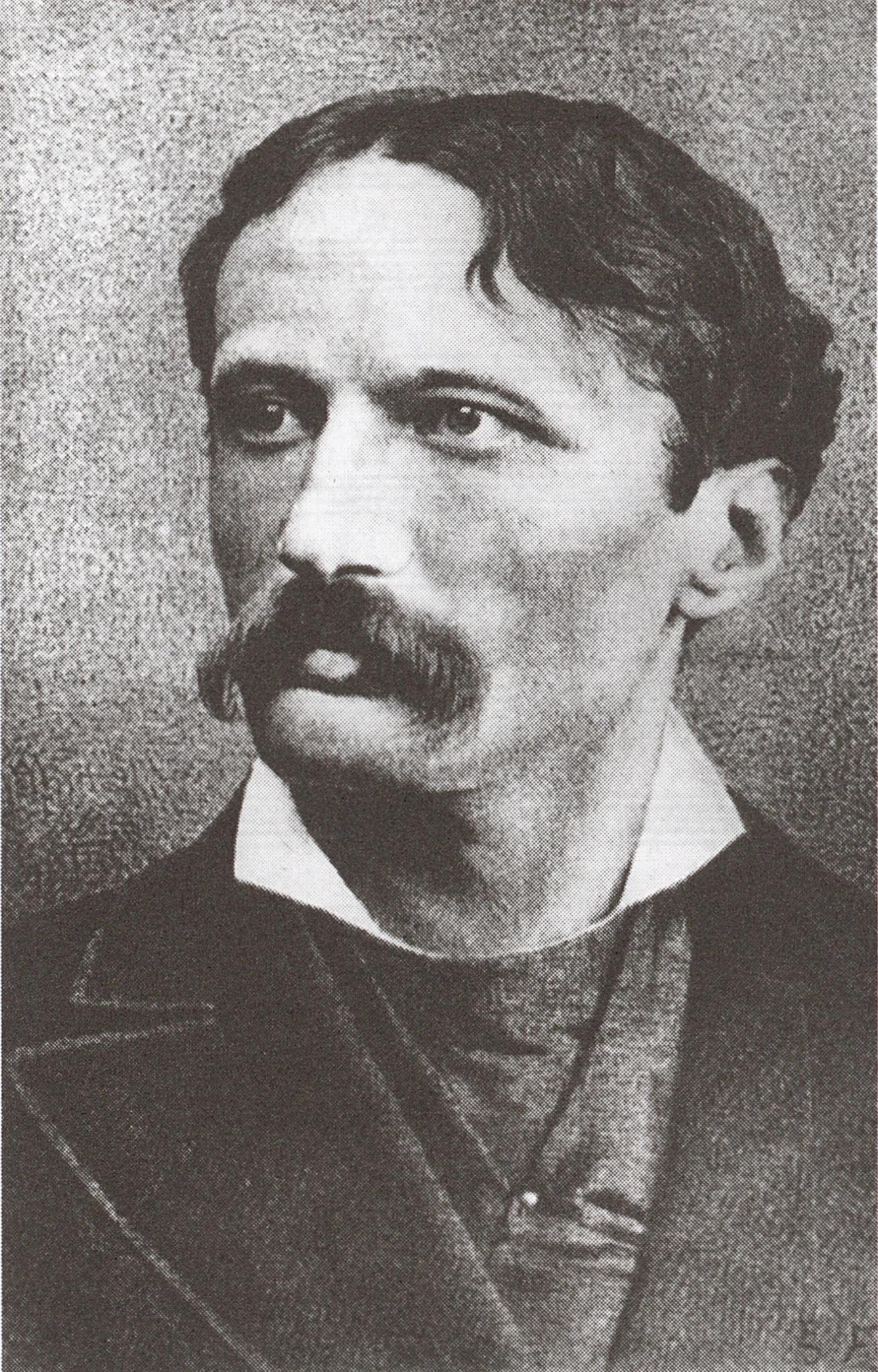
Boito Arrigo, born Enrico Giuseppe Giovanni Boito, pseudonym Tobia Gorrio, *24 February 1842 Padua, †10 June 1918 Milan, Italian composer and poet. He was the son of Silvestro Boito, an Italian miniaturist painter, and Józefa Radolińska (Karśnicka from her first marriage), a Polish countess. Between 1853 and 1861, he studied violin and piano, music theory and, from 1856, composition in A. Mazzucato’s class at the Milan Conservatory. Boito’s first compositions, written together with F. Facci, date from this period: the cantata Il quattro giugno and the mystery play Le sorelle d’Italia. After his studies, Boito left for Paris, where he made contact with Hugo, Berlioz, Verdi and Rossini, among others. It was in Paris that he developed his first ideas for the operas Mefistofele and Nerone. In 1862, the composer travelled (via Berlin) to Poland, staying in Mystki (Greater Poland) at the estate of his half-sister, Tekla Karśnicka. He visited Poland twice more: in 1865 and 1867. Between 1862 and 1872, he worked in Milan as a music critic, collaborating with the journals “Perseveranza”, “Giornale della Societa del Quartetto”, “Gazzetta musicale di Milano” and others. In 1866, Boito joined Garibaldi’s volunteer troops and took part in military operations in the Trentino area. In 1868, Boito’s first opera, Mefistofele, was performed in Milan, where it was met with vehement opposition from the audience and critics due to its departure from the traditional Italian opera style. It was only after the success of the second version of Mefistofele in Bologna in 1875 that triumphant performances followed in other Italian cities, as well as in London, Boston, New York, Lisbon, Berlin and Warsaw (19 December 1880) in 1880. Boito worked on his second opera, Nerone, until the end of his life; the libretto was ready in 1901; the score was completed after Boito’s death by V. Tommasini and A. Smareglia, with the collaboration of A. Toscanini, who conducted the opera’s premiere (1924). Boito also wrote many librettos for operas by other composers, including Verdi’s Falstaff and Otello, and translated the librettos of Wagner’s works (Rienzi, Tristan und Isolde) as well as Weber’s Der Freischütz and Glinka’s Ruslan and Ludmila. He also left behind numerous poems and literary works, such as Il libro dei versi, Liriche sparse, the poem Re Orso, All’arte italiana, the novellas Il Alfier nero, Iberia, Il trapezio and many articles on music. From 1890 to 1891, Boito was director of the conservatory in Parma; in 1893, he received an honorary doctorate from the University of Cambridge, and in 1912, he was made a royal senator.
Boito played a significant role in shaping a new style of opera in Italy. As an ardent advocate of Wagner’s musical drama and translator of his librettos, he contributed to the growth of interest in Wagner’s work among broad circles of Italian society. Boito’s own operatic work, in its pursuit of the ideal unity of music and words, grew directly out of the principles of Wagner’s musical drama, combining them with Italian traditions – lyricism and melodiousness, and the predominance of the vocal over the orchestral. Boito introduced many innovations in the field of harmony and instrumentation, and in Nerone he approached the means of musical impressionism. As both a poet and composer, he achieved perfect harmony between the accents and rhythm of the verse and the musical structure of the vocal parts. His poetic language is characterised by an exceptionally rich vocabulary, full of neologisms and archaic linguistic forms.
Boito took a keen interest in Polish culture. During his stay in Poland in 1865, he wrote a poem in honour of J.I. Kraszewski entitled A Giuseppe Ignazio Kraszewski poeta polacco e commentatore della Divina Commedia. The Jagiellonian Library has preserved Boito’s autographed letter to Kraszewski, written in Milan on 26 November 1880. Boito was an honorary member of the Polish National Museum Society in Rapperswil. He is the author of Italian translations of Mickiewicz’s works: Maria. Romanza (probably a free translation of an excerpt of Part IV of Dziady), A una madre polacca (Do matki polki). Boito is also considered the author of the Italian translation of Pan Tadeusz (Taddeo Soplitza o l’ultimo processo in Lituania), published anonymously in 1871 in Milan.
Literature: A. Bonaventura “Mefistofele” di Arrigo Boito, Milan 1924; P. Nardi Vita di Arrigo Boito, Milan 1942; A. Borriello Mito, poesia e musica nel “Mefistofele” di Arrigo Boito, Naples 1950; M. Vajro Arrigo Boito, Brescia 1955; W. Preisner Arrigo Boito i jego stosunki z Polską, Toruń 1963; G. Mariani Arrigo Boito, Parma 1973; G. Scarsi Rapporta poesia-musica in Arrigo Boito, Rome 1973; H. Swolkień Arrigo Boito. Poeta i muzyk, Warsaw 1988.
Compositions:
Il quattro giugno, cantata, w F. Facci, text by the composer, 1860
Le sorelle d’Italia, mystery play, with F. Facci, text by the composer, 1861
La luna diffonde, barcarolle for choir with orchestra or piano, 1875
Mefistofele, opera, libretto by the composer after Parts I and II of Fausta by J.W. Goethe,1st version performed in Milan 1868, 2nd version performed in Bologna 1875
Nerone, opera, libretto by the composer, performed in Milan 1924.
Opera librettos:
Amleto 1862, music by F. Faccio, 1865
Iràm 1873, music by C. Dominiceti
La falce, music by A. Catalani, 1875
La Gioconda 1875, music by A. Ponchielli, 1876
Ero e Leandro 1871, music by G. Bottesini, 1880, music by L. Mancinelli, 1896
Otello 1883, music by G. Verdi, 1887
Pier Luigi Farnese 1876, music by C. Palumbo, 1891
Falstaff 1890, music by G. Verdi, 1893
Simon Boccanegra 1881, revised libretto by F.M. Piave, music by G. Verdi, 1881.
Editions:
Critiche e cronache musicali, ed. R. de Rensis, Milan 1931
Lettere, ed. R. de Rensis, Rome 1932
Tutti gli scritti, ed. P. Nardi, Milan 1942.