

On 22–23 May 2026, the 16th National Conference of Musicology Students took place in Kraków. The event was organised by the Institute of Musicology at Jagiellonian University and the Jagiellonian University Musicology Students’ Research Group. This annual gathering of young researchers from across Poland once again provided a platform for exchanging ideas, presenting research findings, and discussing current directions in the development of musicology.
The conference programme featured eight thematic panels devoted to topics including music history, music editing and scholarly editions, musical analysis, digital musicology, the social functions of music, and extra-musical sources of inspiration. Papers were presented by students and doctoral candidates representing Poland’s leading academic centres.
Dialogue with Tradition
The first day of the conference opened with the panel “Dialogue with Tradition”, which explored topics such as contemporary lute music, jazz interpretations, and the role of the Latin tradition in liturgical music. Subsequent sessions focused on the relationship between music and other fields of culture and art, the analysis of musical works, as well as issues related to musical sources and editing. Participants had the opportunity to attend presentations devoted to the works of Antonio Vivaldi and Henryk Wars, as well as papers on music in video games and contemporary compositional techniques.
Polish Music Library
An important part of the programme was a presentation by Dr Magdalena Bartnikowska-Biernat devoted to the Polish Music Library portal. Representing PWM Edition, she discussed the digitisation process, presented the portal’s features, and outlined the collections available through the website. She also spoke about future plans for the portal’s development, including its modernisation and the publication of new collections as part of the third stage of the digitisation project.
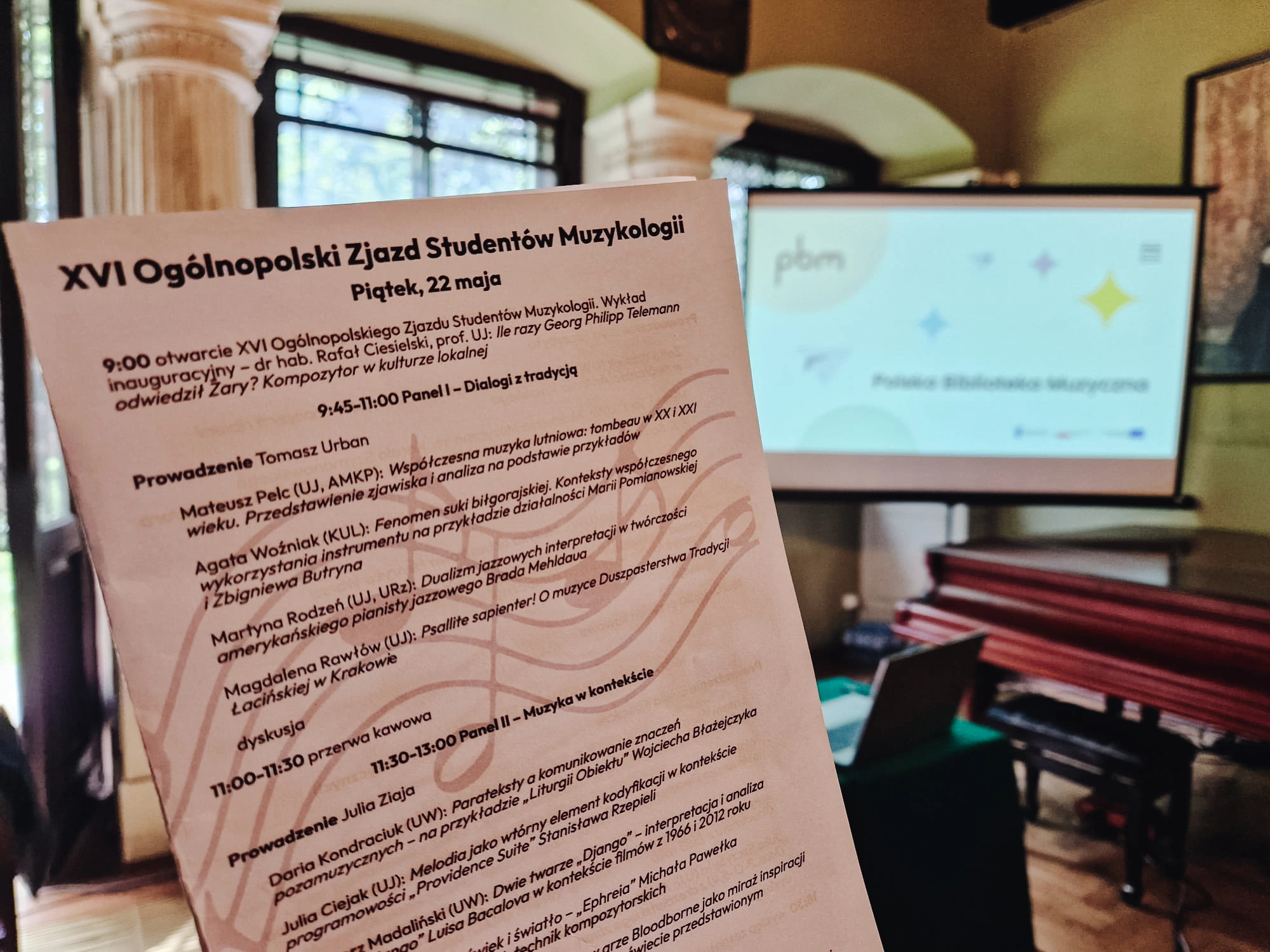
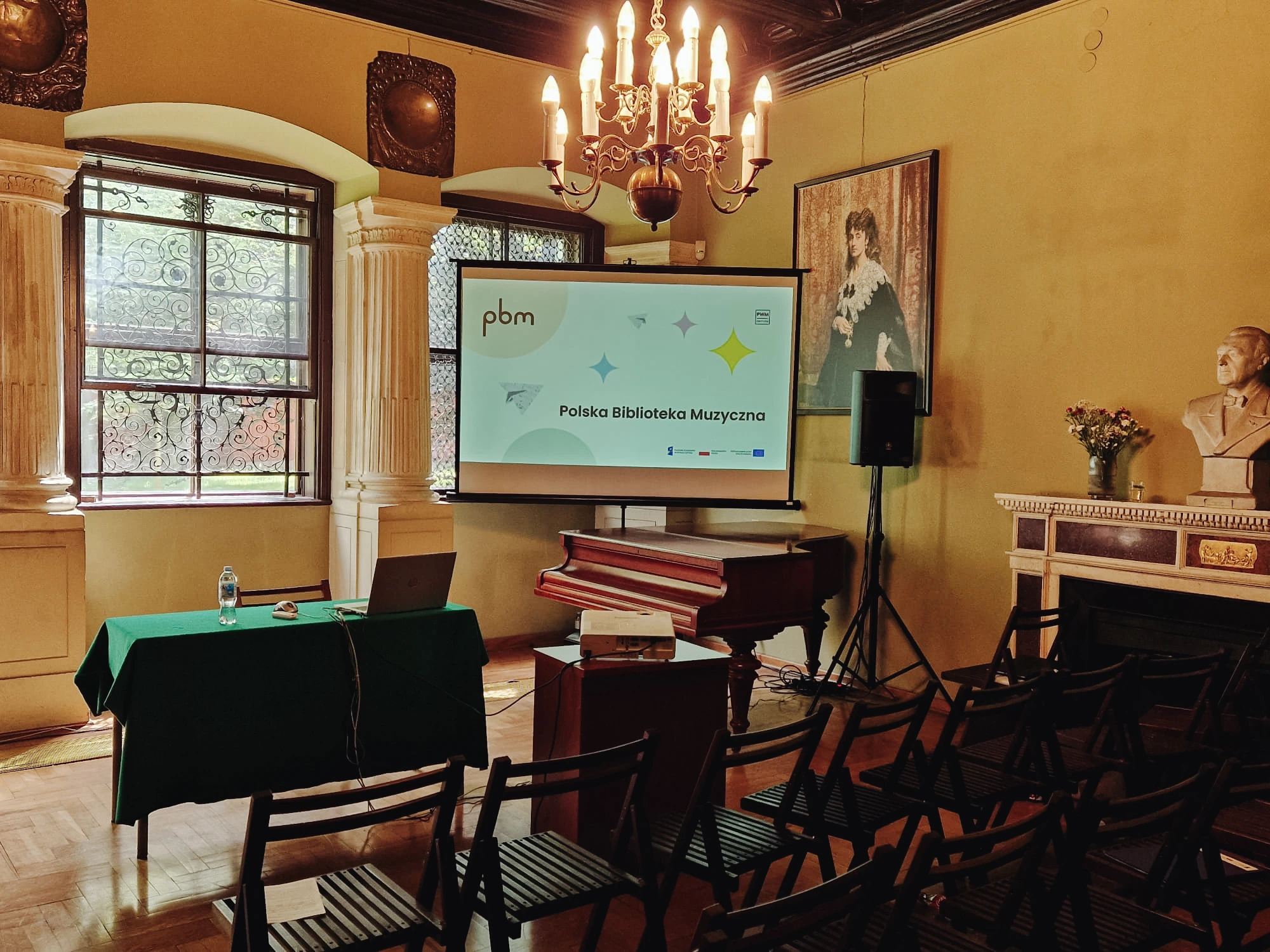
photo by M. Jaworska / PWM
Community Music
The second day of the conference was devoted to topics including inspiration in music, the political and social functions of art, and the evolution of contemporary musical genres. A particularly wide range of subjects was explored during the “Community Music” panel, which featured presentations on regional traditions, inclusive music, sea shanties, Polish rap, and musical performance.
The 16th National Conference of Musicology Students once again demonstrated the diversity and interdisciplinary nature of contemporary musicological research. The event provided young researchers with an opportunity to present their projects, exchange ideas, and establish contacts with academic centres from across Poland.
back to list